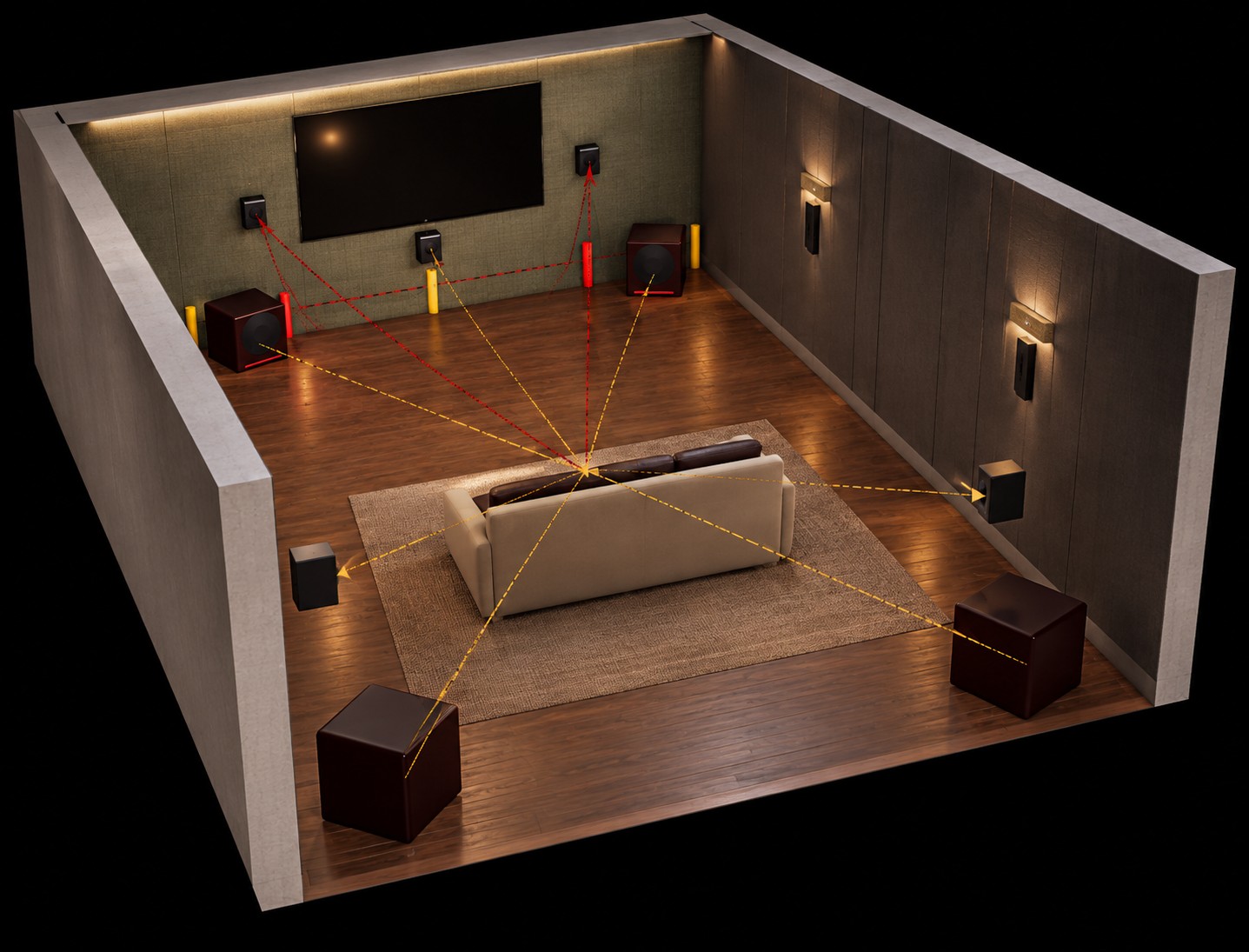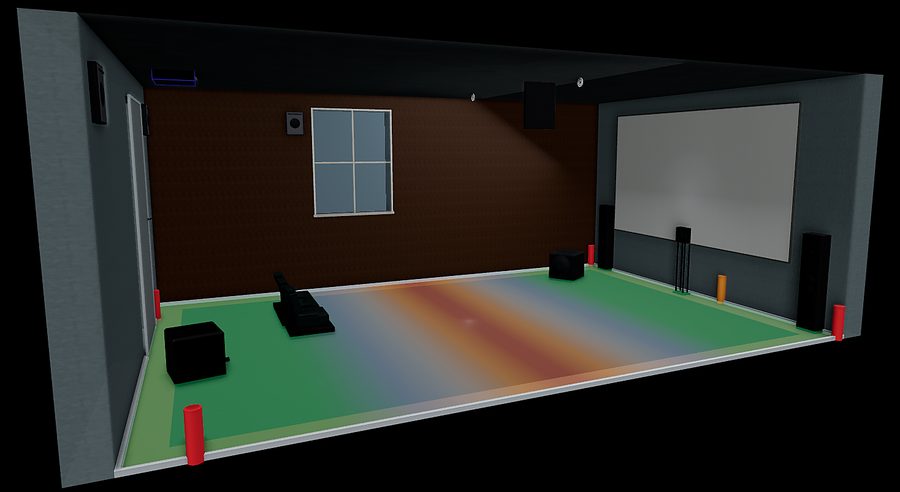
Bass that holds together
Modal pressure balanced across every seat, not just the sweet spot
Your room has a fingerprint.
caanoli is a patent-pending platform that models your room's physics, scores it against what you actually want to hear and see, and verifies the result with real measurement.
Home theater and media room design, calibration, and proof — modeled against what the room is actually for, then measured to confirm it.
Design and diagnostics work with clients anywhere in the world. On-site audio and video calibration is currently DMV-area only.
caanoli at Capital Audiofest — Nov 13–15, Hilton Rockville · Booth H05
 Listener position — center seat
Acoustic path · direct + first reflection
The outcome
Modal pressure balanced across every seat, not just the sweet spot
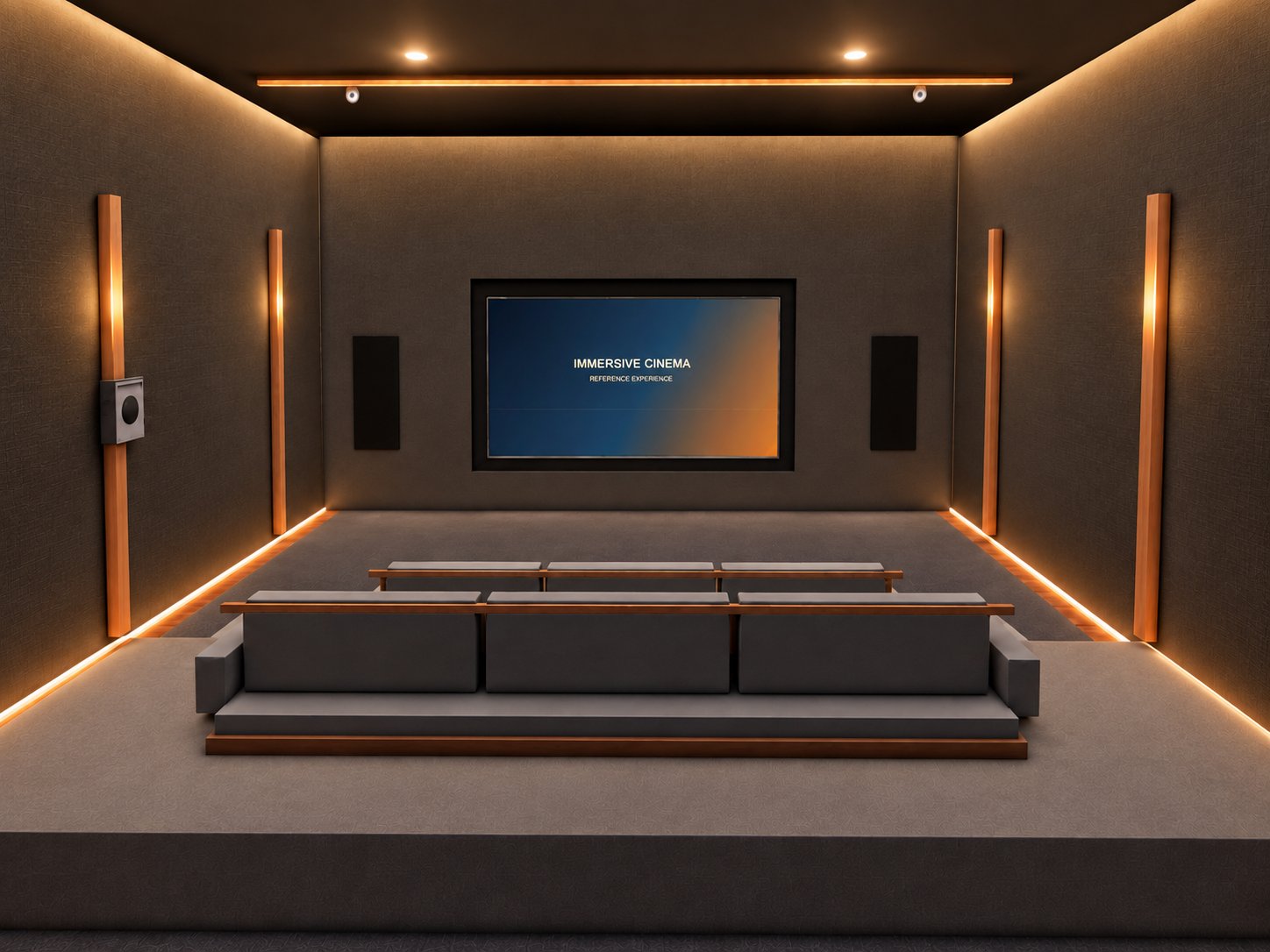
Center-channel intelligibility verified at every seat, not just row one
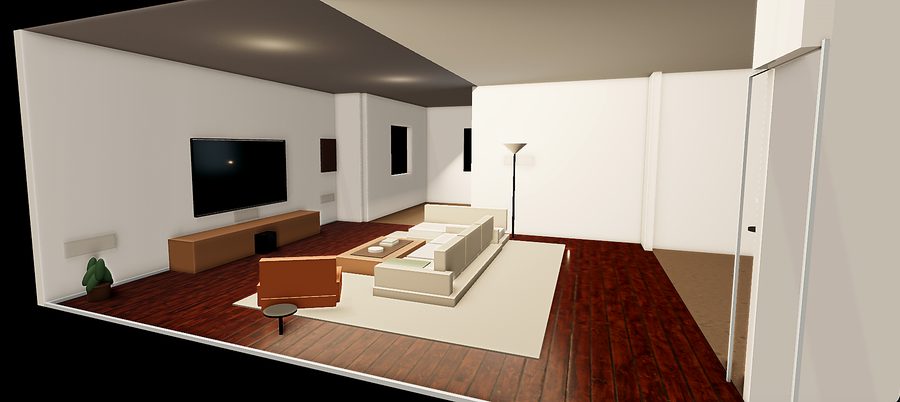
Color and contrast matched to the source, not a showroom preset
Remote diagnostics
From anywhere in the world, book a consultation and caanoli models your room's physics from its geometry and placement — a projected view of how it will perform, and how to improve it: where to sit, where to place your speakers and subs, and whether it's naturally suited to a Bollywood blockbuster in Chennai, a big Hollywood release in Los Angeles, Hi-Fi listening in Berlin, competitive gaming in London, or live sports in the DMV.
Book a remote consultation — from anywhere in the worldDesign, profile & calibration
Every project starts the same way — with what you want the room to do, not what's on sale.
Speaker, seat, and equipment layout modeled to your room's physics before a single item is purchased — remote, available worldwide.
Your room's dimensions, modeled to show what it's naturally best suited for — Hollywood, Bollywood, music, live sports, or a mix — remote, available worldwide.
Room correction, bass management, and time alignment tuned to industry standard, not "close enough by ear" — performed on site, currently DMV area only.
ISF-standard color, gamma, and contrast calibration so the picture matches what the content creator intended — performed on site, currently DMV area only.
The platform
Most home theater design starts with a budget and a gear list. caanoli starts with what you actually want the room to do — then works backward to the equipment, not forward from it.
caanoli is a patent-pending scoring platform. Give it your room's dimensions and it models the physics, predicts how the room will perform against nine real listening and viewing profiles — Cinema, Music & Hi-Fi, Live Sports, Gaming & Spatial, Rhythm & Impact, Vocal & Dialog, Reference, Architectural, Balanced — and reconciles that prediction against real measurement once the room is built. One project. Predicted, designed to the goal, then measured.
Every proposed change is projected before it's made, and the order never changes: physical root cause before electronics, always. Subwoofers, seating, and treatment come before EQ or a gear swap — because fixing the room outperforms fixing it in software.
Here's what that looks like for one sample room — every profile scored on the same 0–100 scale, side by side. Nothing gets hidden to flatter a headline number.
Balanced was this owner's declared target — the room still gets scored, honestly, against all nine.
It's provisional-patent technology, built around a scoring sequence that starts with intent, then physics, then equipment — not the other way around.
The caanoli scoring panel
The same room performs differently for cinema, music, and sports. caanoli scores it against how you actually use it — profile by profile, not one generic average.
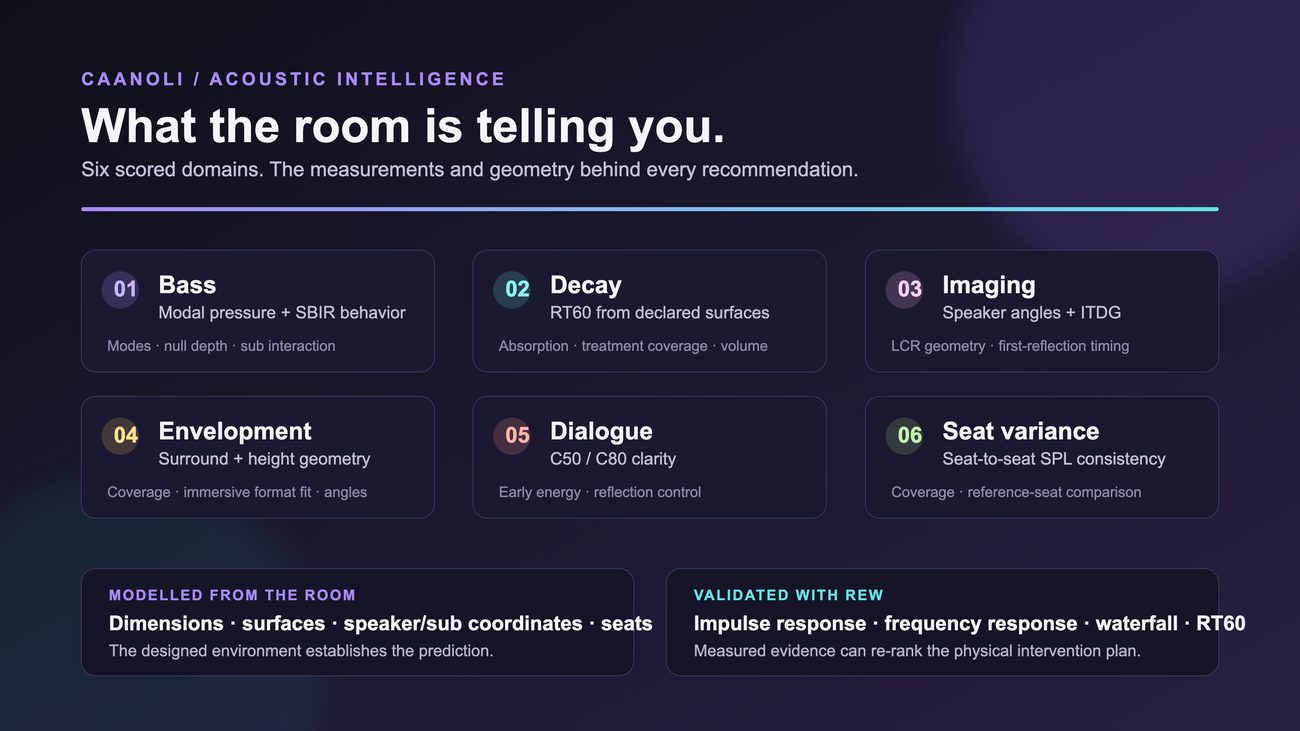
Every room is scored across six independent physical domains, then weighted against the profile you're designing for — so a room built for movie night is judged by a different bar than one built for a listening chair. All nine profile scores stay visible; none of them are hidden to flatter the headline number.
The caanoli method
Speaker and subwoofer placement, seating, and treatment come before EQ — not the other way around. It's caanoli's patent-pending design sequence, and it's why predicted scores hold up against real measurement.
Room geometry and materials become a physics model before anything is bought.
Speakers, subs, and seats positioned where the physics says they'll perform best.
REW measurement against the predicted model — not a guess, a comparison.
The gap between predicted and measured is closed, or explained. Nothing changes silently.
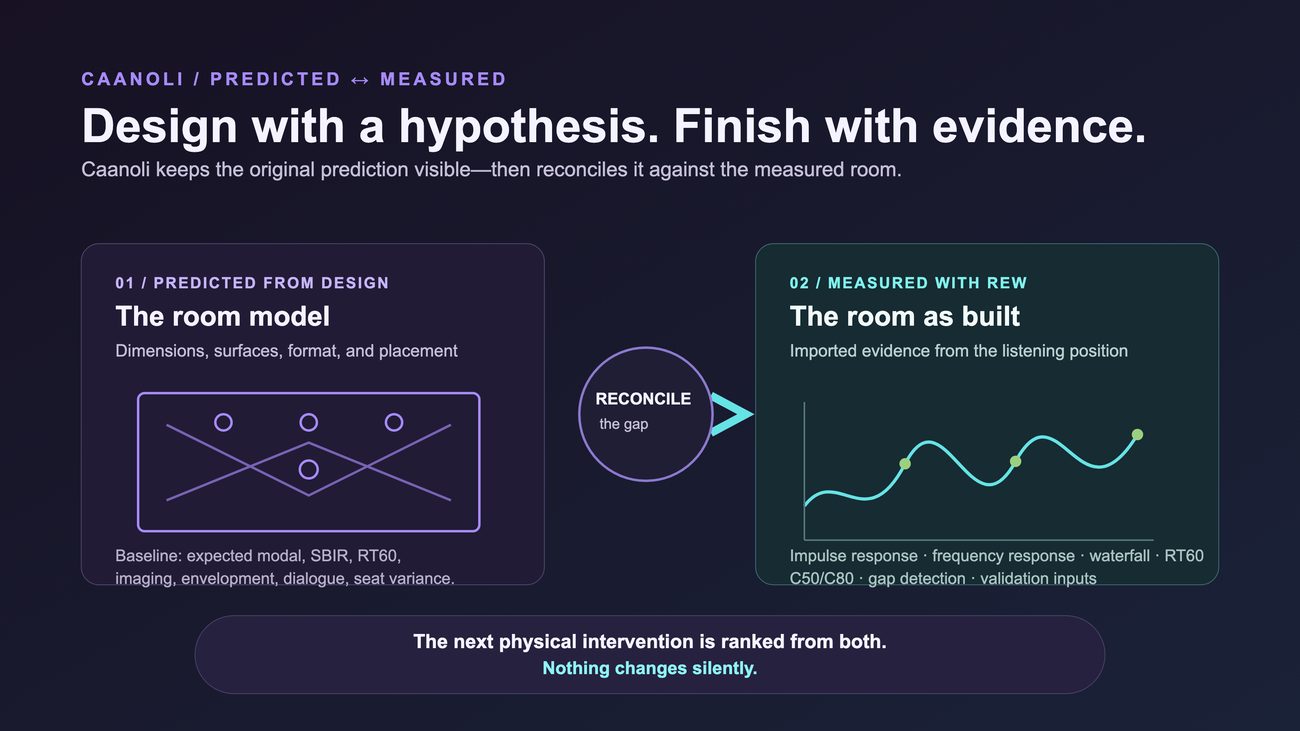
Room Passport
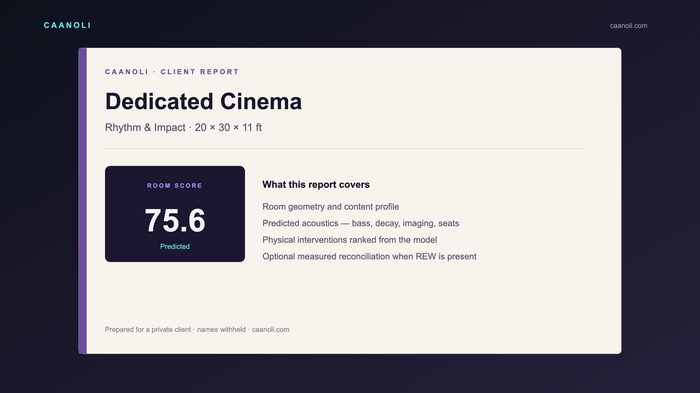
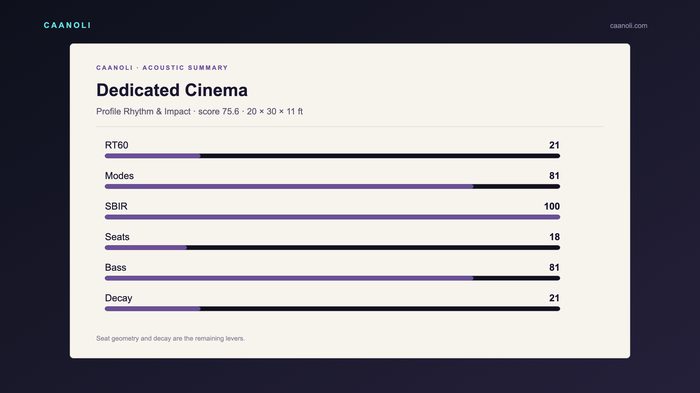
Predictions are stated as predictions. Measurement is stated as measurement. When they disagree, the gap updates the guidance — never the score. A Room Passport begins with prediction — geometry, placement, physics, and recommended changes — and adds a calibrated state once measurement is available, whether you supply it or we capture it on site.
Credentials
Home Acoustics Alliance certification governing room acoustic design and measurement practice.
Advanced certification for multichannel and immersive audio system design.
Imaging Science Foundation certification for display color, gamma, and contrast calibration.
A fair question
No. If you're happy with how your system looks and sounds out of the box, enjoy it — most systems today work perfectly well for occasional viewing and listening.
And if you do engage us, you don't have to hand over the whole project. Ask for advice on one decision, a scored design plan, a calibration on gear you already own, or a full design-and-build — as much, or as little, as the room needs.
For integrators
You already have the client relationships — caanoli gives you the room evidence to bring into them: prediction, physics, and proof, in one project. Or run it yourself, project after project, as part of how you already work. Want to see it in action first? We'll set you up to test it on a real room.
Try it on a project